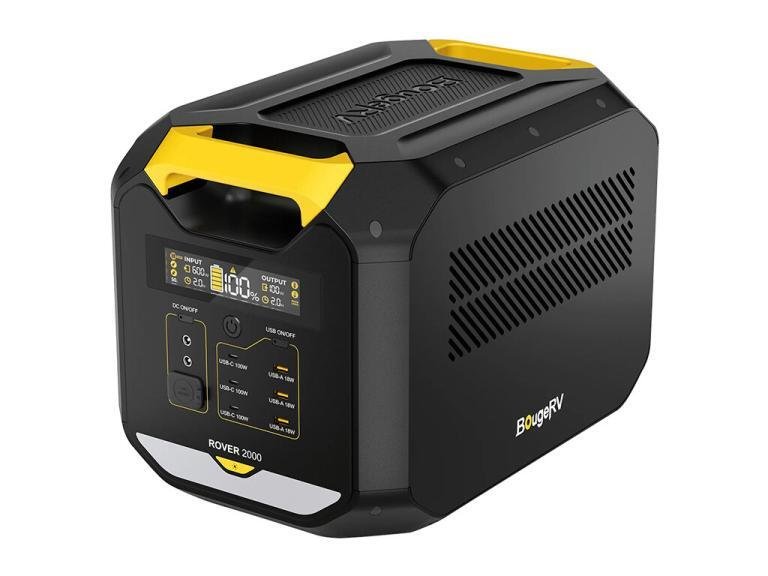
When the power grid flickers – or worse, goes dark for days – the ability to keep essentials running isn't just a convenience, it's a lifeline. Enter the solar backup generator: a silent, emission-free hero increasingly popular for everything from off-grid adventures to ensuring critical home circuits stay live during blackouts. We're diving deep into the Top Solar Backup Generator Products & Brands, cutting through the noise to bring you insights that are genuinely useful, trustworthy, and easy to understand. Think of this as your go-to guide, written by a seasoned pro, for choosing a system that won't leave you in the dark.
At a Glance: Your Solar Generator Essentials
- What it is: A large, rechargeable battery that stores power from the wall, your car, or solar panels. It doesn't create electricity in real-time but converts and stores it.
- Why solar? Eco-friendly, no emissions, quiet, and safe for indoor use, unlike noisy, fuel-dependent gas generators.
- Key factors: Consider its capacity (Watt-hours for how long it runs), output (Watts for what it can power), battery type (LiFePO4 for longevity!), and solar input compatibility.
- Best practice: Keep it charged to at least 80% and unplugged when full for optimal battery health.
- Top brands: Jackery, EcoFlow, Bluetti, Anker, Goal Zero lead the pack with reliable, innovative options.
Why Go Solar When the Lights Go Out?
Imagine the hum of a refrigerator, the glow of a lamp, or the charge on your phone, even when the rest of the neighborhood is plunged into silence. That’s the promise of a solar generator. These devices, often referred to as portable power stations, offer a compelling alternative to traditional gas generators. They run clean, produce zero emissions, operate silently, and are perfectly safe to use indoors, eliminating the carbon monoxide risks associated with combustion engines.
Beyond emergencies, solar generators empower off-grid living, provide power for remote worksites, or simply extend your camping trip with all the comforts of home. The long-term cost savings, once you factor in fuel prices and maintenance for gas models, are substantial. It’s an investment in resilience, convenience, and a greener future.
Demystifying Solar Generators: What They Are & How They Work
At its heart, a solar generator is a powerful, rechargeable battery, packaged with an inverter (to convert battery power to AC for household appliances) and a charge controller (to manage incoming power). It's designed to store electricity, not create it on demand.
You can "fill up" these power stations in several ways: plugging into a standard AC wall outlet (usually the fastest), connecting to your car's 12-volt outlet, or, as the name suggests, linking up with solar panels. The stored energy then flows out through various ports to power your devices. Think of it like a giant power bank for your house, ready to deploy energy when you need it most.
Finding Your Perfect Match: Key Considerations for Choosing a Solar Generator
Picking the right solar generator isn't a one-size-fits-all decision. It hinges entirely on your specific needs, whether you're powering a few gadgets on a camping trip or keeping essential home appliances running during an extended outage. Let's break down the critical factors.
Watts vs. Watt-hours: Understanding Your Needs
This is arguably the most crucial distinction to grasp.
- Output (Watts): This number tells you the instantaneous power a generator can deliver at any given moment. If you want to run a 900W microwave, your generator needs an output of at least 900W, ideally with some headroom for startup surges. Running a device that demands more watts than your generator can output can cause it to shut down or even damage it and your connected electronics.
- Capacity (Watt-hours, Wh): This is the total amount of energy the battery can store. A higher Wh rating means longer run times. To estimate how long a device will run, use a simple calculation:
Generator's Total Wh ÷ Device's Watts = Hours of Run Time. Keep in mind that real-world capacity is often slightly less than advertised due to various inefficiencies. For instance, an EcoFlow Delta Pro with 3,600 Wh capacity can power a large refrigerator (typically 75-150W running) for roughly 24 to 48 hours, depending on its specific draw and how often it cycles.
Solar Panel Savvy: Matching Panels to Your Generator
A solar generator isn't truly "solar" until you pair it with panels. These are rated in watts, indicating their maximum output per hour under ideal conditions. However, the real world rarely offers ideal conditions. Expect actual output to be closer to 50-75% (or even less) of the rated potential, influenced by sunlight intensity, panel efficiency, and angle.
Expert Tip: Always ensure your solar panels' combined wattage is within your power station's acceptable input range to avoid damage. Most experts recommend at least 100-watt solar panels for practical charging. For faster charging, daisy-chaining multiple panels (if your generator supports it) is a game-changer, significantly reducing the time it takes to fully replenish your battery.
The Battery Revolution: Why LiFePO4 Matters
The type of battery inside your generator profoundly impacts its lifespan and performance.
- Lithium-ion (Li-ion): These have been the standard for years – safe, reliable, and common.
- Lithium Iron Phosphate (LiFePO4): This is the latest and greatest technology, quickly becoming the gold standard. LiFePO4 batteries offer significantly longer lifespans, often rated for 2,500 to 4,000 charge cycles (meaning you can fully drain and recharge it that many times before capacity significantly degrades), compared to 500-1,000 cycles for older Li-ion tech. They also tend to charge faster, though their performance can be slightly reduced in extreme cold.
- Solid-state: An emerging technology still largely in development for consumer generators, promising even higher capacities but often with greater bulk and weight. For now, LiFePO4 is the smart choice for longevity and value.
Speed and Versatility: Charging Your Powerhouse
How quickly and flexibly your generator can charge is a major factor, especially in an emergency. Most units offer multiple charging methods:
- AC Wall Outlet: This is typically the fastest way to charge, often topping off a unit in a few hours. Many modern generators feature "fast-charge" modes, but using these sparingly can help extend battery life in the long run.
- 12-Volt Car Outlet: Slower, but a great option for charging on the go.
- Solar Panels: The most sustainable option, but also the most variable in terms of speed. Depending on conditions and panel wattage, solar charging can take anywhere from 4 to 10+ hours. Planning ahead for solar charging is essential.
On the Move: Portability Factors
Solar generators range from compact, backpack-friendly units to heavy-duty behemoths. Their weight, typically ranging from 10 to over 100 pounds, directly correlates with capacity. If you plan on moving your generator frequently – for camping, tailgating, or moving it between rooms – look for features like built-in wheels and telescoping handles. Units like the Anker Solix F2000 stand out in this regard, making heavy lifting much easier.
Powering Everything: Output Ports & Features
The more outputs your generator has, and the wider the variety, the more devices you can power simultaneously. Look for:
- AC outlets: Standard household plugs.
- USB-A and USB-C ports: Essential for charging phones, tablets, and laptops.
- 12-volt car outlets: For car accessories.
- RV-specific ports: For larger recreational vehicles.
- Wireless charging pads: A convenient feature found on newer models.
Smart Extras: Apps, UPS, and Durability
Modern solar generators often come with a suite of additional features that enhance their usability:
- Easy-to-read displays: Critical for monitoring power levels, input/output wattage, and remaining run time.
- App control/monitoring: Many units connect via Bluetooth, allowing you to manage settings, track usage, and monitor battery status from your smartphone.
- Built-in Uninterruptible Power Supply (UPS): This feature allows the generator to act as a pass-through power source. If grid power fails, it automatically switches to battery power within milliseconds, preventing reboots for sensitive electronics like computers or medical equipment.
- LED lights: Handy for dark environments, often with different modes like SOS.
- Storage compartments: For neatly stashing cords and accessories.
- Durable construction: Features like water resistance (e.g., IPX4 rating on Goal Zero Yeti 500), shockproofing, and temperature tolerance ensure your investment lasts.
Solar vs. Gas: Making the Right Backup Call
Choosing between solar and gas generators boils down to understanding their strengths and weaknesses.
- Solar Generators:
- Pros: Quiet, emission-free, safe for indoor use, renewable charging (with panels), lower long-term operating costs.
- Cons: Higher initial cost, limited instant power output compared to large gas units, solar charging dependent on sunlight, can be heavy.
- Best for: Powering needs under 3,000 watts, indoor use, eco-conscious users, extended quiet operation, critical home circuits, camping, and tailgating.
- Gas Generators:
- Pros: Lower initial cost (often), very high power output available (over 10,000 watts), less dependent on weather (just need fuel).
- Cons: Noisy, emit dangerous carbon monoxide (must be used outdoors), require fuel storage and regular maintenance, ongoing fuel costs.
- Best for: Demands over 10,000 watts, automatic whole-house backup systems (with transfer switches), heavy-duty construction sites, situations where noise and emissions are less of a concern.
For needs up to a few thousand watts, solar generators are almost always the superior, safer, and more convenient choice. If you're looking for a comprehensive breakdown of the entire ecosystem, including how to integrate these solutions into your home, you might find our complete solar backup generator guide particularly helpful.
The Best Solar Backup Generators & Brands: Our Top Picks
Now that you know what to look for, let's explore some of the top contenders making waves in the solar generator market. We've highlighted models from leading brands like Jackery, EcoFlow, Bluetti, Anker, and Goal Zero, each excelling in different categories.
Best Overall All-Rounder: Jackery Explorer 1000 v2
The Jackery Explorer series has long been a favorite, and the 1000 v2 is a stellar example. With a 1,070 Wh capacity and a robust LiFePO4 battery rated for 4,000 cycles, it's built to last. Weighing just 23.8 pounds, it strikes a good balance between power and portability. It offers 7 outputs, making it versatile for smaller items and extended off-grid camping trips. Charging takes about 5.5 hours via AC, 6.5 hours with solar, or 11.5 hours from your car. This model embodies reliability and user-friendliness, perfect for a wide range of emergency and recreational uses.
Best for Camping & Portability: Goal Zero Yeti 500
For those who prioritize packability without sacrificing performance for outdoor adventures, the Goal Zero Yeti 500 is a fantastic choice. At 499 Wh capacity and a lean 16.1 pounds, it’s easy to transport. It boasts a LiFePO4 battery with an impressive 4,000-cycle lifespan, along with an IPX4 water-resistant and shockproof design, making it rugged enough for the trail. Its rapid charging capability is a highlight: less than 90 minutes via AC and around 3 hours with a 200W solar panel setup. This is your go-to for powering laptops, cameras, and even mini-fridges on a weekend escape.
Best Mid-Size Powerhouse: Bluetti AC180
When you need a step up in power without jumping to the heaviest units, the Bluetti AC180 shines. It packs an 1,152 Wh capacity and a substantial 1800W output (with a 2700W peak for sudden surges), capable of running more demanding appliances. At 35.3 pounds, it’s still manageable. The AC180 supports up to 500W solar input and features incredibly fast charging, reaching 80% in just 45 minutes. With convenient app control and a built-in 15W wireless charging pad, it's designed for modern usability, ideal for home backup of essential circuits or serious glamping.
Best for Home Blackouts & Extended Use: Anker Solix F2000
For those looking to keep a wider array of home essentials running during a blackout, the Anker Solix F2000 steps up. This unit provides a 2,048 Wh capacity and, importantly, comes with heavy-duty wheels and a telescoping handle, making its 67-pound weight far more manageable around the house. It supports up to a substantial 1,000W solar input for faster recharging during an outage and offers full app control for seamless monitoring. For powering a refrigerator, lights, and charging multiple devices for a day or two, the F2000 is a robust and user-friendly choice.
For even more substantial, long-duration home backup, consider the Anker Solix F3800. This behemoth boasts a 3.84 kWh capacity, which is expandable up to an astounding 53.76 kWh. Its LiFePO4 battery ensures longevity, and it pairs seamlessly with a Smart Home Panel for automatic home circuit backup, providing a near-seamless transition during grid failures.
Best for Heavy-Duty & Whole-Home Backup: EcoFlow Delta Pro / Delta Pro Ultra
When absolute power and scalability for whole-home integration are your priorities, the EcoFlow Delta Pro and its successor, the Delta Pro Ultra, are in a league of their own.
- EcoFlow Delta Pro: With a 3,600 Wh capacity (expandable for critical home systems), this 99-pound unit can power a large refrigerator for approximately 51 hours. It charges rapidly in 2.5 hours via AC and accepts a massive 1,600W solar input. It's a serious contender for comprehensive home backup.
- EcoFlow Delta Pro Ultra: This is arguably the most powerful consumer solar generator tested, offering 7,200W of total output, scalable up to an incredible 90,000W. It includes an inverter for 240V AC power and integrates with the Smart Home Panel 2 for automatic circuit switchover, making it the ultimate solution for extensive outages, even those requiring hurricane-level preparedness.
Best Value Picks: Goal Zero Yeti 500 & EcoFlow RIVER 3
- Goal Zero Yeti 500: As mentioned, this unit offers excellent value for its price point, especially considering its robust features, LiFePO4 battery, and durable construction, making it ideal for camping and general portable power needs.
- EcoFlow RIVER 3: For those on a tighter budget but still needing reliable portable power, the EcoFlow RIVER 3 (or the similar EcoFlow RIVER 2 series) provides a respectable 300W capacity, perfect for small electronics and running a mini-fridge for several hours. Its high portability makes it a great entry-level option for quick power boosts.
Best for Small Electronics & Quick Needs: Bluetti Portable Power Station EB3A
For charging phones, tablets, and running small LED lights, the Bluetti EB3A is a compact champion. Weighing only 10 pounds, it offers a 269 Wh capacity with a long-lasting LiFePO4 battery (2,500 cycles). It can achieve an 80% charge in about 1 hour 45 minutes via AC or solar. Features like an integrated LED light with strobe functionality and a wireless charging pad make it incredibly convenient for quick grab-and-go power.
Getting the Most Out of Your Solar Generator: Best Practices
Investing in a solar generator is just the first step. Proper care and smart usage will ensure it performs optimally and lasts for years.
- Always Be Charging (or Ready to): Make it a habit to charge your power bank whenever possible, especially if a storm is on the horizon. A fully charged generator is a reliable generator.
- The 80% Rule: Store your generator with at least an 80% charge. This is the sweet spot for maintaining battery health. Once it’s fully charged, unplug it to prevent battery degradation from "trickle" charging.
- Avoid Deep Discharges: While modern LiFePO4 batteries are resilient, consistently letting the battery drop below 20% can shorten its overall lifespan. Try to recharge before it gets critically low.
- Plan Your Solar Strategy: Remember that solar charging can take 4 to 10+ hours, depending on panel wattage and sunlight intensity. Don't expect instant power from panels alone in a crisis; charge via AC first, then use solar to extend run times.
- Understand Your Appliances: Know the wattage of the devices you plan to power. This helps you calculate run times accurately and avoid overloading your unit.
- Position for Optimal Sunlight: When using solar panels, position them correctly. Adjusting their angle towards the sun throughout the day can significantly increase charging efficiency.
Common Questions About Solar Generators
Can a solar generator power an entire house?
Typically, no, not like a full-scale whole-home gas generator. Most consumer solar generators are designed for critical circuits (like a refrigerator, lights, and charging ports). High-end, expandable systems like the EcoFlow Delta Pro Ultra can indeed power significant portions of a home, especially when integrated with a Smart Home Panel, offering automatic switchover and managing multiple heavy-draw appliances.
How long do solar generators last?
The lifespan primarily depends on the battery type and usage. Generators with LiFePO4 batteries are rated for 2,500 to 4,000 charge cycles, meaning they can last 10-15 years or more with regular use before their capacity significantly diminishes. Older Lithium-ion batteries typically offer 500-1,000 cycles.
Are solar generators safe to use indoors?
Absolutely! This is one of their biggest advantages over gas generators. Because they produce zero emissions and operate silently, solar generators are perfectly safe for indoor use, making them ideal for apartments, homes, and enclosed spaces during power outages.
How long does it take to charge a solar generator with solar panels?
This varies widely. Factors include the generator's capacity, the wattage of your solar panels, and the intensity of sunlight. For a mid-size unit with a 200W panel, expect 4-8 hours on a sunny day. Larger units with lower wattage panels could take 10 hours or more. Daisy-chaining multiple panels can drastically reduce this time.
Can I leave my solar generator plugged in all the time?
It's best practice to store your generator at around 80% charge and unplug it once fully charged. While many modern units have advanced battery management systems to prevent overcharging, continuous "trickle" charging can still contribute to battery degradation over a very long period.
Your Next Step Towards Energy Independence
Choosing a solar backup generator is a smart move toward greater resilience and peace of mind. Whether you're preparing for severe weather, planning an extended camping trip, or simply seeking energy independence, there's a solar generator perfectly suited to your needs. Start by assessing your power requirements, prioritizing battery longevity (LiFePO4!), and considering portability and charging speed.
The brands reviewed here – Jackery, EcoFlow, Bluetti, Anker, and Goal Zero – consistently deliver quality, innovation, and reliability. By understanding the core features and aligning them with your lifestyle, you'll be well-equipped to make an informed decision and ensure you're never left in the dark. Now go forth and conquer those power outages!