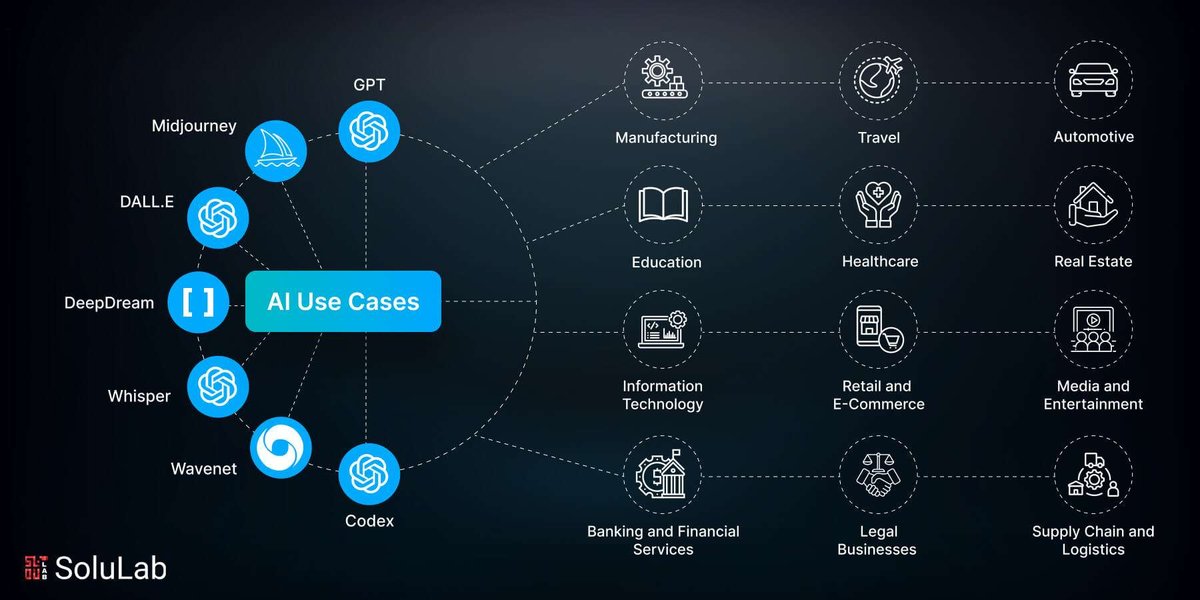
Artificial intelligence isn't just a futuristic concept confined to sci-fi blockbusters; it's a foundational technology woven into the fabric of our daily lives and driving unprecedented transformations across every industry. From the moment you unlock your phone with facial recognition to the algorithms powering groundbreaking medical diagnostics, real-world applications and use cases for AI are expanding at an astonishing pace in 2025. It’s no longer about if AI will impact your world, but how profoundly it already has and will continue to.
At its core, AI refers to computer systems that can perform tasks traditionally requiring human intelligence. This encompasses a broad spectrum of capabilities, including machine learning (ML), deep learning (DL), and the increasingly powerful generative AI (GenAI). The importance of these systems stems from their ability to automate routine tasks, boost efficiency, deliver personalized experiences, and enable far more informed decision-making—saving time, processing vast datasets faster, and offering scalable solutions across the board.
At a Glance: What AI is Doing Right Now
- Personalizing Your World: From movie recommendations to smart home settings, AI learns your preferences.
- Powering Business Efficiency: AI automates tasks, optimizes operations, and enhances customer service across industries.
- Driving Innovation: In healthcare, finance, and manufacturing, AI accelerates discovery and problem-solving.
- Creating New Possibilities: Generative AI is writing text, designing images, and even coding, opening creative frontiers.
- Raising Key Questions: While transformative, AI also brings ethical challenges like bias and privacy to the forefront.
AI in Your Everyday Life: Unseen Helpers and Smart Companions
You might not even realize how many times a day you interact with artificial intelligence. These ubiquitous applications make tasks simpler, more convenient, and often, more enjoyable.
Your Conversational Sidekicks: Voice Assistants & Chatbots
Ever asked Siri a question, had Alexa set a timer, or relied on Google Assistant to navigate traffic? These voice assistants use sophisticated AI algorithms to understand your spoken commands, process natural language, and respond intelligently. They're not just novelties; they assist with reminders, control smart home devices, and answer an ever-growing array of queries, making technology accessible even when your hands are full.
Beyond your living room, AI-powered chatbots are revolutionizing customer support. These virtual agents provide 24/7 assistance, instantly resolving common inquiries, guiding users through processes, and drastically reducing wait times. By handling the routine, they free up human agents to focus on more complex, nuanced issues, ensuring a smoother experience for everyone.
Tailored Experiences: Personalized Recommendations
The algorithms behind your favorite streaming services and online retailers are masters of personalization. Whether you're binge-watching on Netflix, discovering new music on Spotify, or shopping on Amazon, AI analyzes your past behavior, viewing habits, purchase history, and even the choices of similar users to offer tailored content, products, or music playlists. This isn't just about convenience; it significantly enhances engagement and helps you discover things you genuinely love, often before you even know you want them.
The Intelligent Home: Smart Devices and Energy Management
Artificial intelligence is at the heart of the burgeoning smart home revolution. Integrating with various Internet of Things (IoT) devices, AI systems learn your patterns and preferences to automatically adjust lighting, temperature, and security settings. This proactive approach not only enhances comfort and convenience but also leads to significant energy efficiency by optimizing consumption based on occupancy and historical data. Imagine your thermostat knowing to pre-cool your home before you arrive, or your lights dimming as natural light increases—that's AI at work.
Transforming Industries: AI's Business & Operational Impact
Beyond consumer conveniences, AI is a strategic imperative for businesses worldwide, reshaping operational models, driving innovation, and unlocking new levels of productivity.
E-commerce & Retail: From Browsing to Buying
In the competitive world of retail, AI is the engine behind hyper-personalized shopping experiences. It helps brands deliver dynamic pricing, provide instant customer support through intelligent chatbots, and accurately forecast demand to prevent stockouts or overstocking. AI also sifts through countless customer reviews, extracting valuable sentiment and feedback to inform product development and marketing strategies. The result? More relevant shopping journeys and more efficient supply chains.
Healthcare: Diagnostics, Discovery, and Patient Care
AI's potential in healthcare is nothing short of revolutionary. It empowers diagnostic and predictive capabilities by analyzing medical imaging for early disease detection, often with greater speed and accuracy than the human eye alone. AI accelerates drug discovery by simulating molecular interactions, identifies individuals at risk for chronic diseases based on vast datasets, and extracts critical insights from electronic health records, leading to more personalized and effective treatment plans.
Finance: Securing Assets and Maximizing Returns
The financial sector leverages AI extensively to safeguard assets and optimize investments. Real-time fraud detection systems employ AI to spot suspicious transactions instantly, protecting customers and institutions. AI-powered credit scoring models provide more accurate risk assessments, while algorithmic trading systems execute trades at speeds and scales impossible for humans. These tools not only protect against losses but also help financial institutions make smarter, data-driven decisions.
Education: Personalized Learning for Every Student
AI is transforming education into a more adaptive and engaging experience. It creates personalized learning environments tailored to each student's pace and style, utilizing intelligent tutoring systems that offer instant, customized feedback. Automated grading streamlines administrative tasks, while predictive analytics identify students at risk of falling behind, allowing for timely intervention. AI also powers course recommendations, guiding students toward educational paths best suited to their interests and career goals.
Marketing: Data-Driven Campaigns and Customer Connection
Modern marketing thrives on data, and AI is its ultimate interpreter. It enables sophisticated customer segmentation, allowing marketers to target specific demographics with unparalleled precision. AI-driven ad optimization ensures campaigns reach the right audience at the right time, while predictive analytics forecast customer lifetime value and churn risk. Dynamic content personalization ensures that every customer interaction, from email to website visit, feels uniquely designed for them.
Manufacturing & Supply Chain: Peak Operational Excellence
In manufacturing, AI drives operational excellence. Supply chain visibility platforms leverage AI to track goods from raw materials to consumer, predicting potential disruptions. Demand planning algorithms minimize waste and optimize inventory. Computer vision-powered quality control systems inspect products for defects with incredible speed, and route optimization algorithms ensure goods are transported efficiently.
Human Resources: Smarter Hiring, Happier Employees
AI is streamlining HR processes, from talent acquisition to employee management. It powers resume screening systems that efficiently identify qualified candidates, conducts skills gap analyses to inform training programs, and provides AI-powered chatbots to answer common employee questions. This leads to improved hiring outcomes and more effective talent management strategies, allowing HR professionals to focus on strategic initiatives rather than administrative burdens.
Transportation & Automobiles: Safer, Smarter Journeys
The future of transportation is inextricably linked with AI. It powers autonomous vehicles, making self-driving cars a reality. Ride-hailing algorithms efficiently match drivers with passengers and optimize routes. AI-driven traffic prediction models help alleviate congestion, enhancing both safety and efficiency across our roads.
Agriculture: Feeding the World Sustainably
AI is revolutionizing agriculture, making farming more productive and sustainable. Drones and satellite imagery, coupled with AI, enable crop health monitoring, detecting issues before they become widespread. Yield prediction models help farmers plan more effectively, while smart irrigation systems conserve water by delivering it precisely where and when needed. AI-powered pest management systems identify and target threats, reducing the need for broad-spectrum pesticides and promoting healthier ecosystems.
Security & Surveillance: A New Era of Protection
In security, AI significantly enhances capabilities. Facial recognition technology aids in identification and access control, while anomaly detection algorithms spot unusual behaviors or patterns that might indicate a threat. Behavioral biometrics add another layer of security, and AI-powered network security systems actively monitor and defend against cyberattacks, creating more robust protective measures.
Energy & Environment: Powering a Sustainable Future
AI is crucial for managing our planet's resources more intelligently. It enables smart grids for balancing energy supply and demand, optimizing distribution, and improving resilience. AI predicts renewable energy output, helping integrate solar and wind power more effectively. AI-powered building management systems can reduce energy consumption by an impressive 10-30%, and the technology assists with carbon footprint tracking and overall grid resilience systems, creating a more sustainable infrastructure. Just as AI optimizes energy usage and resilience, robust solutions like solar backup generators offer tangible benefits in ensuring continuous power and reducing reliance on traditional grids.
The Building Blocks: Advanced AI Capabilities in Action
Behind these diverse applications are specialized branches of AI, each tackling a different facet of human-like intelligence.
Natural Language Processing (NLP): Speaking AI's Language
NLP is the secret sauce behind AI's ability to understand, interpret, and generate human language. It powers large language models (LLMs) like ChatGPT, enabling them to engage in coherent conversations. Beyond chatbots, NLP facilitates seamless language translation, performs sentiment analysis on vast amounts of text, and extracts key information through named entity recognition, making human-machine interaction feel increasingly natural and intuitive.
Computer Vision: Teaching Machines to See
Computer vision grants machines the ability to "see" and interpret visual information from images and videos. This advanced capability is essential for facial recognition systems, critical for medical image analysis (e.g., detecting tumors in X-rays), enabling object detection in autonomous vehicles, and powering video analysis for security and deeper insights into environments.
Generative AI: Creating What Wasn't There Before
One of the most exciting recent advancements, Generative AI, allows models to create entirely new content from simple text prompts. This includes generating human-like text (as seen with tools like ChatGPT), producing realistic visuals (think DALL-E and Midjourney), writing functional code, composing music, editing video, and even assisting with design concepts. GenAI represents a paradigm shift, moving AI from analysis to pure creation. It's a powerful tool for marketing content creation, rapid software prototyping, and innovative user interface design, among countless other possibilities where there isn't a single "correct" answer, but a need for novel output.
Robotics: Intelligence in Motion
Robotics combines machine learning with physical systems to create intelligent, autonomous machines. This field is bringing us collaborative robots (cobots) that work alongside humans in factories, caregiving robots assisting the elderly, precision surgical robots, and highly efficient warehouse automation robots, all designed to perform complex physical tasks with accuracy and adaptability.
Space and Astronomy: Unlocking the Universe's Secrets
Even the cosmos benefits from AI. AI systems analyze vast amounts of telescope data, enhance astronomical images for clearer insights, and forecast rare celestial events. They are instrumental in identifying exoplanet candidates and empowering autonomous spacecraft to make critical decisions far from human control, accelerating our understanding of the universe.
Why AI Matters: Unpacking the Benefits
The widespread adoption of AI isn't just a trend; it's driven by tangible, measurable benefits that impact organizations and individuals alike.
Enhanced Efficiency and Speed
AI systems can process colossal amounts of information and execute tasks at speeds far beyond human capability. This translates into quicker turnaround times, optimized workflows, and faster decision-making across virtually every domain.
Accuracy and Error Reduction
In repetitive or data-intensive tasks, AI systems make fewer errors than humans. Their ability to learn and improve with continuous model development means they become increasingly accurate over time, leading to higher quality outputs and reduced waste.
Personalization at Scale
One of AI's most powerful benefits is its capacity to deliver customized experiences to millions of customers simultaneously. This level of tailored interaction was previously unimaginable, fostering stronger customer relationships and greater satisfaction.
Round-the-Clock Operations
Unlike human workforces, AI systems don't get tired. They can operate 24/7 without fatigue, ensuring continuous service delivery, monitoring, and processing, which is critical for global operations and time-sensitive tasks.
Cost Reduction
By automating labor-intensive processes, reducing errors, and optimizing resource allocation, AI significantly lowers operational overheads. This cost efficiency can be reinvested into innovation or passed on to consumers.
Innovation Acceleration
By taking over routine, data-heavy tasks, AI frees human experts to focus on strategic thinking, creative problem-solving, and pioneering new ideas. This accelerates the pace of innovation, allowing organizations to push boundaries and develop groundbreaking solutions faster.
Navigating the Landscape: Risks and Responsible AI
While the benefits are immense, a responsible approach to AI necessitates a clear understanding and mitigation of its inherent risks and challenges.
Bias and Ethical Concerns
AI systems learn from the data they're fed. If this historical data reflects societal biases or systemic inequities, the AI can inadvertently perpetuate and even amplify them, leading to unfair or discriminatory decisions. Addressing this requires developing robust ethical frameworks, implementing fairness-focused algorithms, and ensuring diverse and representative training datasets.
Job Displacement
Automation is a double-edged sword. While it boosts productivity, it can also lead to job displacement for roles involving routine or repetitive work. While AI is simultaneously creating new roles in development, oversight, and maintenance, proactive workforce reskilling and education programs are essential to ensure a smooth transition and equip individuals for the jobs of tomorrow.
Data Privacy and Security
AI thrives on data, often requiring vast amounts of personal information to function effectively. This raises significant concerns about data privacy and security. Robust measures like advanced encryption, differential privacy (adding noise to data to protect individual identities), and federated learning (training models on decentralized data) are crucial to protect sensitive information from misuse or breaches.
Over-Reliance on AI Systems
Blind trust in AI can be perilous, especially in critical domains like healthcare or finance. When AI systems fail, due to flawed data or unforeseen circumstances, over-reliance without human oversight can lead to catastrophic consequences. Human judgment and critical oversight remain vital, ensuring that AI acts as an augmentation tool rather than an unchecked authority.
Glimpse into Tomorrow: The Future of AI
The journey of artificial intelligence is far from over. The coming years promise even more sophisticated and integrated AI applications.
Multimodal Systems: AI that Understands Everything
The next frontier for generative AI involves multimodal systems that can seamlessly combine and interpret various types of data—text, image, video, and audio—to solve complex problems. Imagine an AI that can understand a spoken request, generate a relevant video, and explain its actions in text, all at once.
Customized Models: AI Built Just for You
While large foundational models are impressive, the future will see a proliferation of highly customized AI models trained on proprietary datasets. These tailored solutions will align precisely with an organization's specific needs, data, and objectives, offering unparalleled precision and effectiveness.
AI and Robotics Integration: The Physical-Digital Convergence
Expect increasingly sophisticated systems that combine advanced AI perception and reasoning with physical robotic actions. This integration will lead to more autonomous, adaptable, and versatile robots capable of interacting with the physical world in increasingly nuanced ways, from complex manufacturing to personalized care.
AI as Collaborator: Augmenting Human Potential
Rather than replacing humans, AI is evolving into a powerful collaborator. It will excel at handling information processing, data analysis, and repetitive tasks, thereby augmenting human capabilities. This frees up human professionals to focus on creativity, critical thinking, strategic planning, and complex problem-solving, fostering a truly synergistic partnership between human and artificial intelligence.
Making AI Work for You: Implementation and Career Paths
For businesses, the path to AI adoption is varied. For individuals, a career in AI offers immense opportunity.
Implementing AI for Business Value
Companies looking to leverage AI should start strategically. Often, the best initial approach is to begin with high-impact applications using no-code AI solutions. These platforms allow business users to implement AI without extensive programming knowledge, quickly demonstrating value. For more complex models, autoML software can optimize model selection and automate many machine learning tasks. When unique challenges arise, organizations might build custom solutions in-house or with specialized partners, or even run data science competitions to crowdsource innovative solutions. Finally, leveraging pre-trained models from vendors can accelerate deployment for common tasks like image recognition or natural language understanding. The key is to align the right tools and approach with specific business goals.
Building a Career in AI: Essential Skills
The demand for AI talent is soaring. If you're looking to enter this dynamic field, a strong foundation is crucial.
- Essential Technical Skills: You'll need a solid grasp of machine learning fundamentals (supervised, unsupervised, reinforcement learning), deep learning (understanding neural networks), natural language processing (NLP), and computer vision.
- Programming and Tools: Proficiency in programming languages like Python and R is critical, as is knowledge of SQL for data management. Familiarity with AI frameworks such as TensorFlow and PyTorch is a must. Expertise in data analysis and visualization tools, along with experience in cloud computing platforms (AWS, Azure, Google Cloud), will set you apart.
- MLOps and Deployment: Understanding Machine Learning Operations (MLOps) is increasingly important. This includes knowledge of model versioning, continuous monitoring, retraining strategies, and scaling AI solutions for production environments.
- Learning Path: Start with foundational concepts in mathematics and statistics, progress to comprehensive online courses or university programs, and most importantly, build a project portfolio to demonstrate your skills. Engaging with the broader AI community through forums and conferences can also provide invaluable insights and networking opportunities.
Embracing the Intelligent Future
Artificial intelligence is far from a monolithic entity; it's a diverse suite of technologies being applied across nearly every industry and aspect of daily life. Its practical impact—from streamlining operations and enhancing customer experiences to accelerating scientific discovery and powering sustainable solutions—is undeniable.
Successfully harnessing AI's power requires more than just deploying the latest tools. It demands a strategic vision that aligns AI applications with specific organizational goals, a commitment to ethical data use, and the provision of robust infrastructure and skilled talent. By combining innovation with thoughtful, strategic execution, we can continue to unlock the immense potential of AI, driving progress and shaping a more intelligent, efficient, and interconnected future for all.