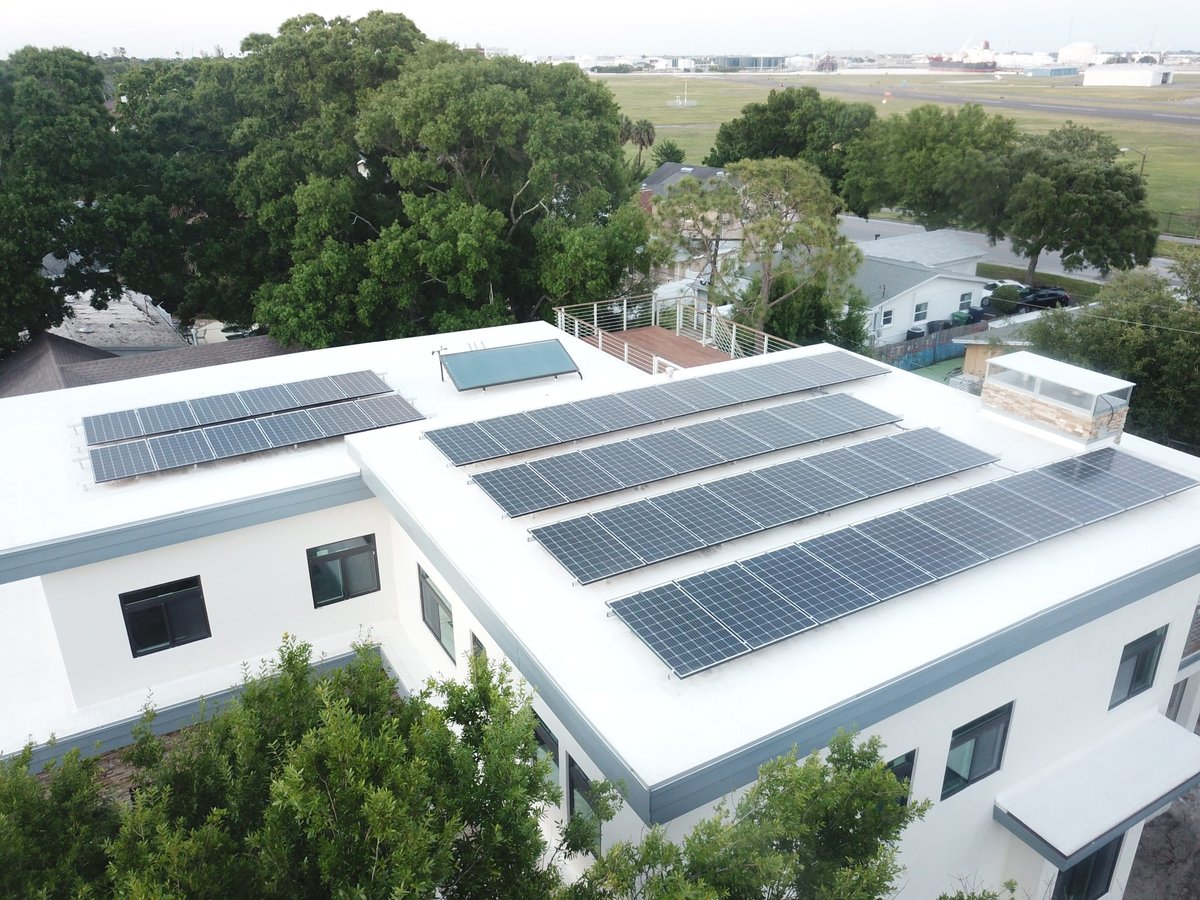
The lights flicker, then plunge your home into darkness. A familiar dread settles in. For too many homeowners, this scenario is becoming commonplace, a stark reminder of our aging power grids and a changing climate. But what if the next outage didn't mean losing power? What if your home seamlessly transitioned to its own energy supply, keeping essentials humming? That's the promise of a solar battery backup system, and understanding how to choose the right one is no longer a luxury—it's a necessity.
Gone are the days when a simple fossil-fuel generator was your only real option. Today's integrated solar-plus-storage solutions offer true energy independence, clean power, and quiet, reliable backup. Let's explore how to find the perfect fit for your home, ensuring peace of mind even when the grid lets you down.
At a Glance: Your Solar Backup System Essentials
- Integrated Power: Combines solar panels and battery storage for continuous clean energy.
- Rising Need: Essential due to increased grid outages from extreme weather and rising electricity costs.
- Key Benefits: Energy independence, significant cost savings, and reliable power during outages.
- Core Components: Solar panels, inverters, batteries, monitoring, and safety features.
- Sizing is Key: Match capacity (kWh) and power output (kW) to your specific household needs.
- LiFePO4 Gold Standard: Lithium Iron Phosphate batteries offer superior safety and longevity.
- Professional Installation: Crucial for safety, code compliance, and warranty validation.
- Financial Incentives: Leverage federal tax credits and state programs to reduce costs.
- Future-Proof: Emerging tech like solid-state batteries and EV integration are on the horizon.
Why Solar Backup is No Longer a "Nice-to-Have"
Power outages aren't just inconvenient; they can be dangerous and costly. Over the past two decades, climate-related disasters have surged by 83% compared to previous periods, directly translating to more frequent and prolonged grid failures. But it's not just Mother Nature; the economic landscape is also shifting. Average U.S. electricity rates have climbed 4.8% annually from 2019 to 2023, and punitive time-of-use pricing makes peak-hour electricity astronomically expensive.
Then there’s the evolution of solar policies. Net metering, once a generous incentive, is being curtailed in many regions. California's NEM 3.0, for instance, slashed compensation for excess solar energy exported to the grid by roughly 75%. This means simply sending power back to the utility often isn't financially sensible anymore. Without a battery to store that surplus, you’re missing out on the full value of your solar investment.
The Undeniable Benefits of Energy Resilience
A properly sized solar battery backup system offers more than just emergency power; it’s a strategic investment in your home and future.
- True Energy Independence: Imagine producing most of your own electricity. With solar and storage, you can achieve 80-95% independence from the utility grid, relying less on fluctuating rates and vulnerable infrastructure.
- Significant Cost Savings: Store low-cost solar energy generated during the day and use it when grid electricity is most expensive, like during evening peak hours. This "rate arbitrage" can lead to average annual savings of $1,200-$3,600.
- Unwavering Reliability: Keep your refrigerator running, medical equipment powered, and security systems active during an outage. Modern systems can provide 1-7 days of backup power, depending on how they're configured and how judiciously you use energy.
Deconstructing Your Solar Backup System
At its heart, a solar battery backup system is an integrated energy solution designed to capture, store, and deliver clean energy right when you need it. It combines several key components working in harmony.
The Key Components that Power Your Home
- Solar Panels: These are your energy collectors, converting sunlight into direct current (DC) electricity. Modern panels are typically 20-22% efficient and come with impressive 25+ year warranties.
- Inverters: The unsung heroes. Solar panels produce DC power, but your home runs on alternating current (AC). Inverters convert DC from the panels and batteries into usable AC electricity. Hybrid inverters are especially common in backup systems, efficiently managing both solar production and battery operations.
- Battery Storage: This is where your energy independence truly shines. Lithium-ion batteries, particularly LiFePO4, are the standard for residential use, storing surplus DC electricity for later use. Residential systems typically range from 10-40+ kWh.
- Monitoring Systems: Smart controllers and intuitive smartphone apps allow you to track your energy production, consumption, and storage in real-time. This visibility empowers you to optimize usage and understand your energy habits.
- Safety Equipment: An essential, often overlooked, layer. This includes automatic disconnect switches, surge protectors, and fire suppression systems, all critical for protecting your home and family.
How Energy Flows: Day-to-Day and During Outages
Understanding the energy flow helps demystify the system:
- Sunlight to Power: Solar panels generate DC electricity from the sun.
- Immediate Needs First: This power first goes to meet your home's immediate electrical needs.
- Battery Charging: Any surplus power that your home isn't currently using then charges your battery bank.
- Grid Export (If Applicable): If your batteries are full and you’re still generating more power than you need, the excess can be exported to the utility grid (if net metering is in place).
- Evening/Outage Supply: When solar production is low (evening, night, cloudy days) or during a grid outage, your batteries seamlessly take over, supplying power to your home.
- Grid Replenishment: If your batteries become depleted, the system will draw power from the grid (assuming it's available).
System Types: Grid-Tied, Off-Grid, and Hybrid
Your choice of system configuration dictates your relationship with the utility grid:
- Grid-Tied with Battery Backup: This is the most common setup. Your home remains connected to the utility grid, but the battery provides backup power during outages. You can often still benefit from net metering when the grid is active.
- Off-Grid Systems: For those seeking ultimate independence, off-grid systems are completely disconnected from the utility. They require larger battery banks and often a backup generator to ensure power during extended periods of low solar production.
- Hybrid Systems: These combine elements of both, offering the ability to connect to the grid but also to isolate and operate independently when needed.
AC vs. DC Coupling: Understanding the Flow
The way your solar panels connect to your battery system impacts efficiency and flexibility:
- DC-Coupled Systems: In this setup, solar panels connect directly to the battery system via a charge controller. This means DC power goes straight from the panels to the battery, often only needing one inverter to convert power for your home. It’s generally more efficient (94-96%) and ideal for new installations. Discuss the implications of high-voltage DC in the home with your installer.
- AC-Coupled Systems: Here, both the solar panels (with their own inverter) and the batteries (with their own inverter) connect on the AC side of your home's electrical system. This is better for retrofitting existing solar installations but involves multiple DC-to-AC and AC-to-DC conversions, making it slightly less efficient (90-94%).
Powering Through the Dark: Sizing Your System Right
Choosing the right solar backup system hinges on proper sizing. Too small, and you'll quickly run out of power; too large, and you’re overpaying. It's about balancing your needs with your budget.
Understanding Key Metrics
Before diving into calculations, familiarize yourself with these terms:
- Storage Capacity (kWh): Measured in kilowatt-hours, this tells you how much total energy a battery can store. Think of it like the size of your fuel tank.
- Load Capacity (kW): Measured in kilowatts, this indicates how much power a battery can deliver at any given moment.
- Continuous Capacity: The steady power output under normal conditions (e.g., how many circuits you can run concurrently).
- Peak Capacity: The brief surge of power a battery can provide for things like appliance start-ups (e.g., refrigerator compressor kicking on).
- Round-Trip Efficiency: How much energy is retained during the entire charge-discharge cycle. Modern systems typically boast 90-98% efficiency.
Step 1: Audit Your Energy Needs
Start by understanding your current usage.
- Review Electricity Bills: Look at 12 months of bills to see your average monthly kWh usage, identify seasonal peaks, and note any time-of-use (TOU) rates that might influence your usage patterns.
- Identify Critical Loads: This is crucial for backup. Categorize your appliances and circuits:
- Essential: Refrigerator, medical equipment, security system, basic lighting, well pump.
- Important: Wi-Fi, device chargers, a few extra lights.
- Comfort: HVAC, water heater, laundry.
- Non-Essential: Hot tub, pool pump, electric car charging (during an outage).
Step 2: Calculate Daily Energy Consumption for Backup
For your essential and important loads, estimate how long you’ll need them during an outage.
- Formula: (Appliance Watts × Hours Used Daily) ÷ 1,000 = Daily kWh for that appliance.
- Example: A refrigerator (150 Watts) running 12 hours a day = (150 × 12) ÷ 1,000 = 1.8 kWh/day. A few lights (60 Watts total) for 4 hours = (60 × 4) ÷ 1,000 = 0.24 kWh/day.
- Sum these up to get your total daily essential consumption.
Step 3: Matching Battery Capacity to Your Home
Once you have your daily essential usage, you can determine the battery capacity needed, typically aiming for 1-2 days of backup without solar recharging.
- Small Homes (1,000-1,500 sq ft):
- Essential Backup: 10-15 kWh
- Whole-Home Backup: 20-25 kWh
- Medium Homes (1,500-2,500 sq ft):
- Essential Backup: 15-20 kWh
- Whole-Home Backup: 25-35 kWh
- Large Homes (2,500+ sq ft):
- Essential Backup: 20-30 kWh
- Whole-Home Backup: 35-50 kWh
- Extended Backup: For 3-4 days of power, you'd typically need 30-80+ kWh. A 10 kWh battery can generally run a fridge, lights, and several device chargers for 2-3 days with careful conservation.
Step 4: Sizing Solar Panels to Recharge Efficiently
Your solar panels need to be sized not just for your daily consumption, but also to effectively recharge your batteries.
- Formula: Required Solar Capacity (kWh/day) = Daily Home Energy Use (kWh/day) + (Battery Capacity (kWh) ÷ Peak Sun Hours).
- Example: If your home uses 30 kWh daily, you want a 20 kWh battery, and your area gets 5 peak sun hours per day:
- 30 kWh (home) + (20 kWh (battery) ÷ 5 hours) = 30 + 4 = 34 kWh of daily solar production needed.
- To achieve 34 kWh of daily production in 5 peak sun hours, you’d need approximately 6.8 kW of solar panels (34 kWh / 5 hours). Installers often add a buffer, so this might translate to a 10-12 kW solar array.
The Heart of the System: Picking the Right Battery Technology
The battery is the core of your backup system, and not all batteries are created equal. Understanding the differences in lifespan, safety, and performance is crucial for choosing the right solar backup system.
Lithium Iron Phosphate (LiFePO4): The Gold Standard
LiFePO4 batteries are widely regarded as the top choice for residential solar backup systems.
- Pros: Exceptional safety due to stable chemistry, a wide operating temperature range, and excellent longevity.
- Cons: Higher upfront cost than some alternatives and slightly lower energy density (meaning they can be a bit bulkier for the same capacity).
- Lifespan: 15-20 years (6,000+ charge cycles, retaining about 80% capacity after this cycle count).
- Efficiency: 95-98%.
Nickel Manganese Cobalt (NMC): The Compact Choice
Often found in electric vehicles, NMC batteries offer high energy density.
- Pros: More compact for a given capacity, making them attractive where space is limited.
- Cons: Higher fire risk if damaged or improperly managed, requiring more complex thermal management systems.
- Lifespan: 10-15 years (3,000-5,000 cycles, retaining around 70% capacity after cycles).
- Efficiency: 92-95%.
Lead-Acid: The Budget Option (with caveats)
While cheaper upfront, lead-acid batteries (flooded or sealed) are rapidly losing favor for solar backup.
- Pros: Low initial cost.
- Cons: Significantly shorter lifespan (3-8 years), fewer charge cycles (500-1,500), require more maintenance (for flooded types), and only about 50% of their stated capacity is truly usable without damaging the battery.
A Glimpse into Tomorrow: Emerging Battery Technologies
The battery landscape is evolving rapidly:
- Solid-State Batteries: Expected around 2026-2027, promising 50% higher energy density, enhanced safety, faster charging, and a longer lifespan.
- Iron-Air Batteries: Poised to arrive by 2026, these are designed for long-duration discharge (100+ hours) at an ultra-low cost, ideal for grid-scale storage.
- Advanced Flow Batteries: Offer scalability, virtually unlimited cycling, and a 25+ year lifespan, though often more complex for residential integration.
Bringing It All Together: Installation and Safety Essentials
Once you’ve selected your system, proper installation is paramount. This isn’t a DIY project; it's a complex electrical undertaking with significant safety and financial implications.
Why Professional Installation Isn't Optional
Professional installation ensures:
- Code Compliance: Adherence to National Electrical Code (NEC 2023) standards, including rapid shutdown capabilities, arc-fault/ground-fault protection, proper grounding, and overcurrent protection, plus local code variations.
- Permit Approval: Navigating the permit process can be complex; professionals handle this efficiently.
- Equipment Warranties: Most manufacturers require professional installation for warranties to be valid.
- Utility Interconnection: Ensuring your system safely connects with (or disconnects from) the grid.
- Safety: Protecting your home from electrical hazards and fire risks. DIY installation can void insurance and create dangerous conditions. If you're looking for more basic backup options, you might want to learn about solar backup generators as an alternative or complementary solution.
Navigating Electrical Codes and Permits
Any electrical work, especially involving renewable energy and battery storage, requires strict adherence to codes. Your installer will ensure your system meets all local and national requirements, which can include specific clearances, emergency disconnects, and labeling.
Indoor vs. Outdoor: Location Matters
The placement of your battery system has implications for performance and safety:
- Indoor Installation: Offers better temperature control, protecting batteries from extreme heat or cold, which can degrade performance and lifespan. It also provides security. However, it requires adequate ventilation, fire safety considerations, and dedicated space. UL9540A fire safety certification is essential for indoor systems.
- Outdoor Installation: Saves valuable indoor space but exposes the system to weather and temperature extremes. Systems must be housed in NEMA-rated enclosures for protection against the elements.
The Gold Standard of Safety
When it comes to batteries, safety certifications are non-negotiable:
- UL9540A: This is the gold standard for battery fire safety testing, verifying a battery's ability to resist thermal runaway propagation.
- UL1973: Certifies the safety of the battery itself.
- IEEE 1547: Ensures safe and reliable grid interconnection.
Local fire departments often have specific requirements, such as minimum 3-foot clearance around equipment, clearly marked emergency disconnect switches, and visible labeling.
The Dollars and Cents: Investing in Energy Resilience
A solar backup system is a significant investment, but the financial benefits and peace of mind can make it incredibly worthwhile.
Understanding System Costs (Estimated for 2025)
The cost largely depends on the battery's capacity and the complexity of the installation. Battery modules typically account for 60-70% of the total cost. The median cost per kWh was around $1,000 in 2024, down from $1,300 in 2022.
- 10 kWh System: $12,000-$18,000
- 20 kWh System: $20,000-$32,000
- 30 kWh System: $28,000-$45,000
- 40+ kWh System: $35,000-$60,000+
Tapping into Incentives
Several programs can significantly offset your upfront costs:
- Federal Tax Credit (ITC): The Investment Tax Credit offers 30% of the total system cost (including solar panels and battery storage) through 2032, before declining. (Always verify current status as policies can change).
- State & Local Incentives: Many states offer additional programs, such as California's SGIP, NY-Sun, Massachusetts SMART, and Hawaii's Battery Bonus. Research what’s available in your specific area.
Making Your System Pay Off: Net Metering & Rate Arbitrage
In areas with unfavorable net metering policies (like California's NEM 3.0, which drastically reduced export credits), battery storage is no longer just for backup; it's essential for a strong return on investment.
- Time-of-Use (TOU) Optimization: By charging your battery during low-cost off-peak hours (or with free solar energy) and discharging it during high-cost peak hours, you can practice "rate arbitrage," potentially saving $100-$300 monthly on your electricity bill.
- Virtual Power Plants (VPPs): A growing trend where utilities can draw small amounts of power from privately owned batteries (with owner agreements and fees) during evening demand spikes. This helps the grid avoid firing up less efficient "peaker plants," transforming your solar investment into a community asset. Owners typically receive $2-$5 per kWh of capacity per month.
Projecting Your Payback Period
With the federal tax credit and potential rate arbitrage savings, the payback period for a solar battery backup system typically ranges from 6-12 years. In states with unfavorable net metering policies, where rate arbitrage savings are substantial, this period can be as short as 6-8 years.
Making the Smart Buy: A Buying Guide and Red Flags
Choosing the right solar backup system requires diligence. Here’s what to look for and what to avoid.
Key Factors to Evaluate
When comparing systems and installers, focus on these critical aspects:
- Technical Specifications:
- Usable Capacity: Not just total capacity, but how much you can actually use (Depth of Discharge).
- Continuous & Peak Power Output: Ensure it meets your essential and occasional surge needs.
- Efficiency: Look for 90% or higher round-trip efficiency.
- Operating Temperature Range: Important for optimal performance, especially if installed outdoors.
- Safety & Certifications: UL9540A is non-negotiable for fire safety. Also confirm UL1973 and IEEE 1547.
- Warranty & Support: Aim for a 10+ year warranty, including a capacity retention guarantee (at least 70% after the warranty period or stated cycle life). Check if there's a local service network.
Smart Questions for Potential Installers
Don't be afraid to dig deep. Ask about:
- How they calculated your specific capacity needs.
- Which circuits will be backed up.
- How the system handles peak demands (like an AC start-up).
- Options for system expansion in the future.
- Their certifications and licensing.
- All required permits and the timeline for installation.
- Projected savings and payback period specific to your usage.
- Available financing options.
- What guarantees they offer if the system doesn't perform as promised.
Red Flags to Watch Out For
Protect yourself from common pitfalls in the solar industry:
- High-Pressure Sales Tactics: Avoid door-to-door sales or installers who push for immediate decisions.
- Unusual Pricing: Quotes significantly higher or lower than market rates (get multiple quotes to compare).
- Unlicensed Contractors: Always verify licenses and insurance.
- "Free" Systems: These are often leases or Power Purchase Agreements (PPAs) that offer less long-term savings than ownership.
- Lack of References/Insurance: A reputable installer should readily provide these.
- Unproven Battery Manufacturers: Stick to established brands with solid track records and certifications.
- No Safety Certifications: Especially UL9540A.
- Inadequate Warranties: Less than 10 years or poor capacity guarantees.
Actionable Advice: Your Next Steps
- Speak with Multiple Installers: Most work with only one or two battery brands, so talking to several will give you a broader view of options.
- Get Multiple Quotes: Compare not just the total cost, but also equipment specifications, warranties, installation timelines, and post-installation support.
- Consider Financing Options: Explore cash, dedicated solar loans, or home equity loans. Understand the differences between owning (more long-term savings) and leasing/PPAs (lower upfront cost).
The Road Ahead: Future Innovations in Solar Backup
The world of solar backup is dynamic, with exciting innovations continually emerging, promising even greater efficiency, integration, and grid benefits.
Electric Vehicle (EV) Integration: Your Car as a Power Plant
One of the most exciting trends is the integration of electric vehicles with home energy systems:
- Vehicle-to-Home (V2H): Bidirectional EV chargers will allow your electric vehicle to power your home during an outage, turning your car into a giant mobile battery.
- Vehicle-to-Grid (V2G): Your EV could even send excess power back to the utility grid during peak demand, potentially earning you credits or payments.
- Built-in Home Backup: Some EVs are already designed with built-in capabilities to serve as home backup systems.
Smart Energy Management: AI at the Helm
Future solar backup systems will be even more intelligent, optimizing energy flow with unprecedented precision:
- AI-Powered Optimization: Artificial intelligence will learn your energy patterns, predict solar production based on weather, and dynamically manage charging and discharging for maximum savings and resilience.
- Dynamic Load Balancing: Systems will intelligently prioritize power to critical appliances and shed non-essential loads when battery levels are low.
- Smart Home Integration: Seamless connectivity with smart home devices will create a truly intelligent and responsive energy ecosystem, leading towards microgrids and even peer-to-peer energy trading among neighbors.
Your Next Steps Towards Energy Independence
Choosing the right solar backup system is a journey towards greater energy independence, financial savings, and invaluable peace of mind. You're not just buying a piece of equipment; you're investing in resilience for your home and family.
Start by carefully assessing your needs, understanding the core components and technologies, and then meticulously vetting potential installers. Arm yourself with questions, gather multiple quotes, and pay close attention to safety certifications and warranties. The future of reliable, sustainable energy is within your grasp, and with careful planning, your home can be a beacon of power, even when the grid goes dark.